Showing posts with label Ancient Britain. Show all posts

Friday, January 31, 2020

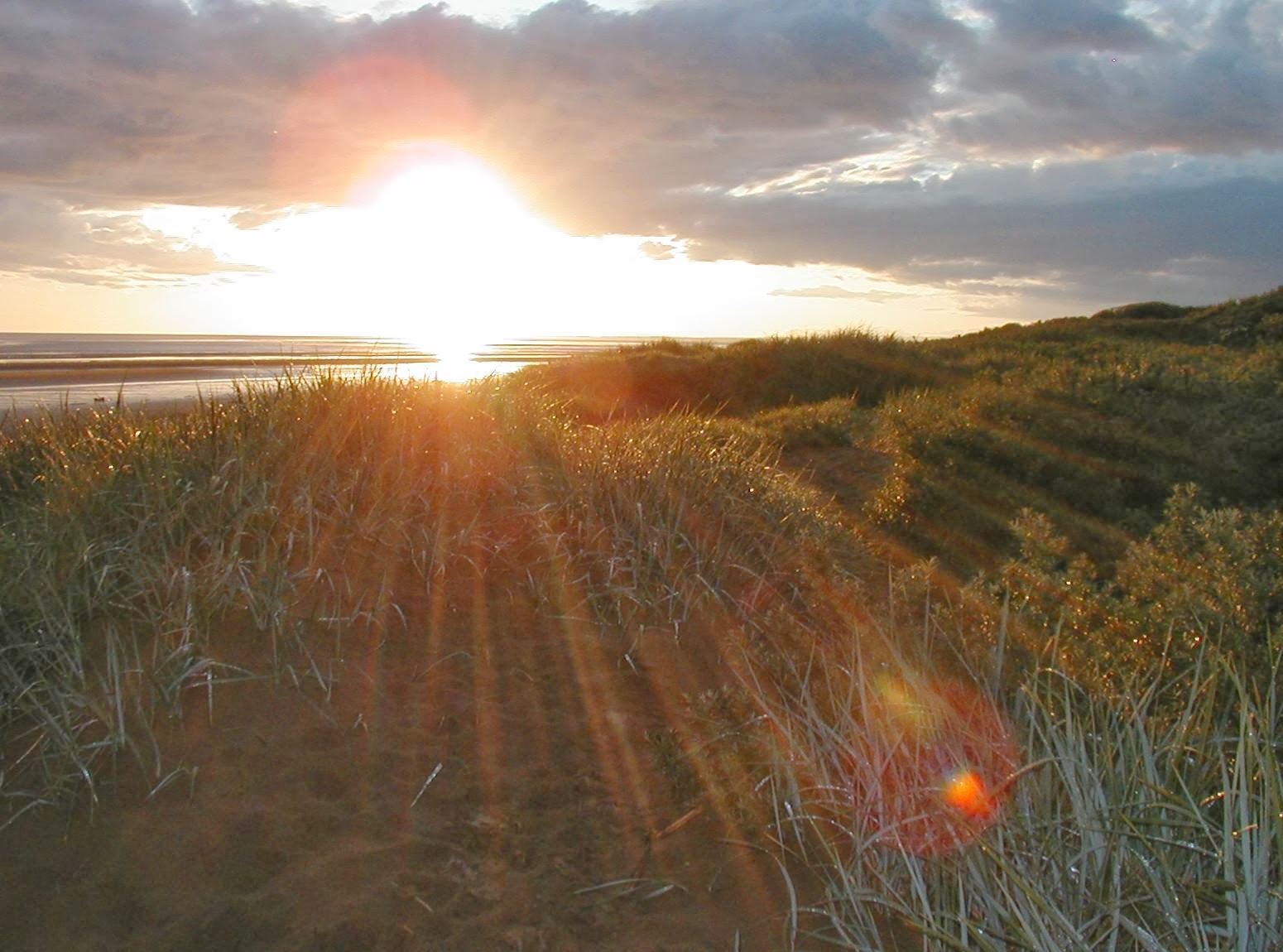
Imbolc Eve Blessings


The first quarter of the Celtic calendar has arrived, following the new year at Samhain (Hallowe’en) and the Winter Solstice at Yule.


The winter Crone becomes the spring Maiden (or Brigit), waiting for new growth to spring forth.


Brigit with her white wand creates germination and fertilisation as we enter February, wolf month.


The maid, her wand, lamp and wolf wander the land encouraging winter to recede.


Brigit carries the mirror and the cup.

The mirror so we may reflect and to divine the future; the cup that holds life, the womb of Mother Earth, so that we may share and imbibe, rejoicing in the fertility of the forthcoming spring awakening.

The time to plough the first furrows in the land.


Imbolc brings hope, regeneration and reflection.


May Brigit cast her light upon the world, spreading fruitfulness and love.


Bright Blessings for Imbolc, one and all xXx

Saturday, December 21, 2019

Stonehenge


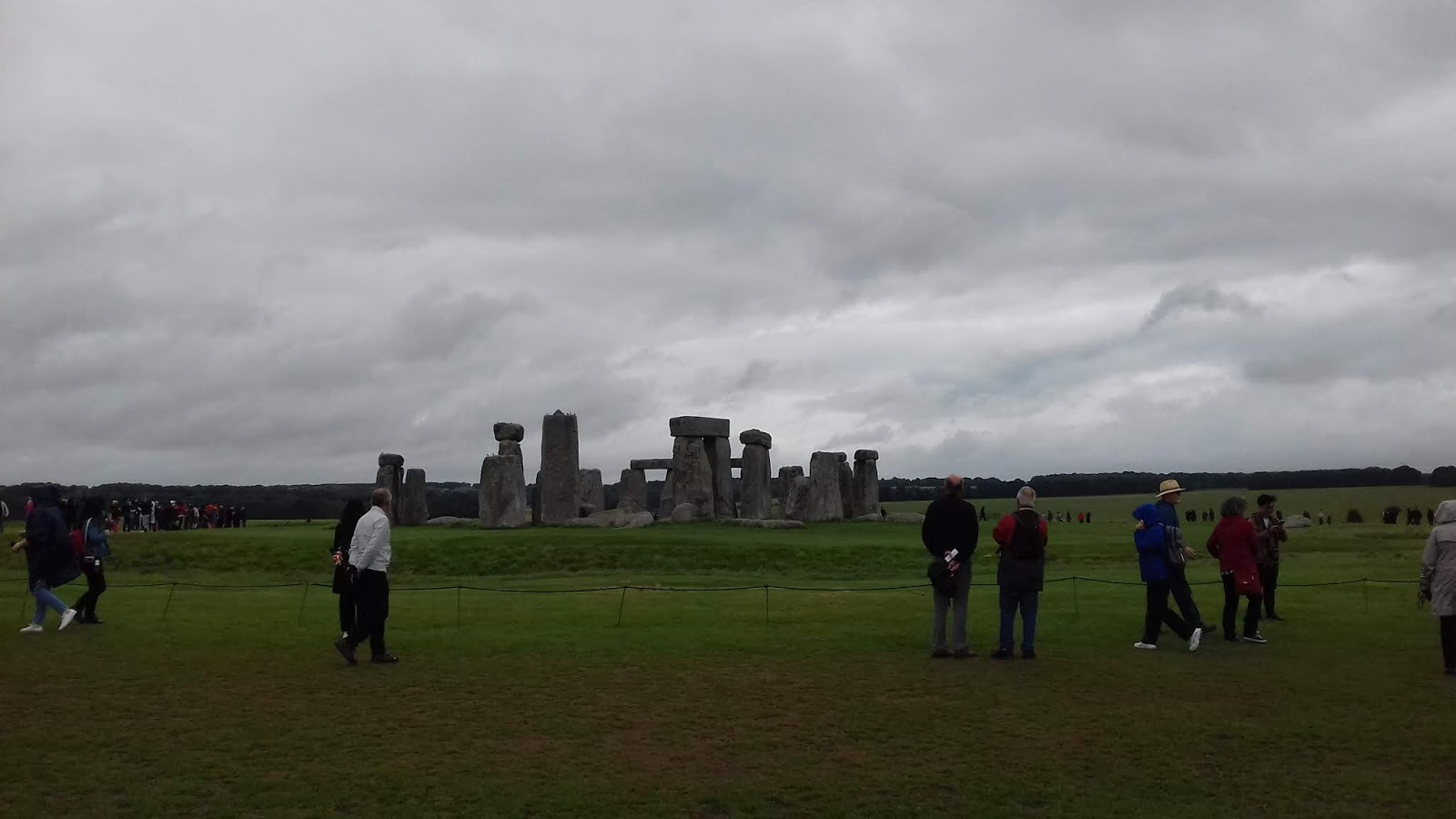
With a history spanning 4,500 years, Stonehenge had been a national monument I had wanted to visit for a long time. This was our last stop in our Wiltshire weekend and I was the only one, out of three of us, who had never been. My companions reserved their opinions until I had had chance to witness the stones for myself.

Stonehenge is busy, even when other places are out of season. It is an endless movement of people in queues on foot, on buses and around the henge itself. Visitors from several continents are among us as we chatter in the line, waiting to show our prepaid tickets. We bypass the shop and restaurant so we can get to the circle early and avoid most of the crush. But it is still bustling as we wait for a bus to drive us down the long approach. I’m nervous, as I dislike crowds and my claustrophobia begins as we jostle into the bus and stand for the journey. Passing fields, with other burial mounds, and small, relatively young clusters of forest, we eventually arrive.


It’s not as large as I’d envisaged, though exactly how large I thought it was I cannot say! We walk slowly round, moving back from the clusters of foreigners all straining to take selfies in front of the rope fencing. We’d rather try and soak up the atmosphere, except there isn’t any. I’m disappointed to admit it was my least favourite site of the entire weekend. For all its supposed majesty and history, I didn’t feel the closeness to it that I had experienced at Avebury or West Kennet. I felt as though the spirits that had once lingered in this place had long disappeared, deciding to leave the relic to its gaggle of daily visitors with their camera phones. It was all rather impersonal.


We quickly departed and chose to walk back to the visitor centre, as did several others. We spent the time talking history, comparing the monuments we had seen that weekend and identifying burial mounds visible either side of us. We passed a marker stone for a World War I pilot who had crashed nearby and together, gave his memory a few moments of silent, contemplative thought. We had not seen it from the bus, so it made the return journey extra special. Arriving back at the visitor centre, we stopped by the cluster of replica Neolithic houses, where someone in period costume was explaining daily chores and tools to a family with small children. A nice touch, being educational as well as fun.


I found the on-site museum fascinating as it houses over 250 archaeological objects that have been discovered at the site over the years, including jewellery, pottery, tools and human remains. The forensic reconstruction of a man from 5,500 years ago was quite lifelike and it brought the past closer as so often we cannot relate to their way of life, but it’s easier to relate to a face. He could have been anyone walking among us, had he been dressed in modern clothes, which made the past that little bit more tangible. The rolling visual display with voiceover, taking you through the construction history of Stonehenge, gave an insight into how and when it had all arrived in the landscape. I had read most of the information in various books, but I thought it provided a clear linear example. Lastly, the restaurant and shop were expensive, so we did not linger. We planned to lunch somewhere on the way home. I bought some token bookmarks and wrist bangles for the tribe and we bid farewell to arriving coach parties and lengthening queues.

Out of all of the four sites we visited on our soggy weekend in 2016, Avebury was my absolute favourite. It felt spiritually close and an intensely personal experience. Being able to walk among the stones and touch them could possibly have made a difference for me at Stonehenge. I shall allow myself to simply wonder at that.

Solstice Blessings one and all xXx


FACTS: COURTESY OF ENGLISH HERITAGE WEBSITE [link]


E S MOXON has had a lifelong passion for history and writing. A childhood filled with family visits to ancient burial sites and stone circles fuelled her imagination. Inspired by classic medieval tales and Norse sagas, Elaine imagined herself inhabiting these Dark Ages and exploring the landscapes in her mind and continues to do so through her novels. The first in her ‘Wolf Spear Saga’ series is ‘WULFSUNA’ and books two and three will be out soon. When not lost in pages of the past, she lives in the Midlands with her family and their chocolate Labrador.

Blood, betrayal and brotherhood.
They come to honour a Warrior-Lord’s dream,
An ancient saga weaving their destiny,
But a treacherous rival threatens their fate.
The Wolf Sons are coming.
WULFSUNA

Wednesday, September 20, 2017

Building Believable Characters

When people talk of 'building' characters I'm always reminded of the Sci-Fi film 'West World' with Yul Brynner. However, this is effectively what we are doing even though it is in our minds and the minds of our readers. We want our characters to be real and three dimensional, as though we could see them walking down the street. Every writer has their own method for moulding and sculpting paper creations into living, breathing, 'real' beings our readers will believe. I thought I would share some of the things I have done, some of which you may already do, or don't do and might find useful.


I begin with visual basics - hair/eye colour, height and build - so that when I am writing down first draft scenes and dialogue I can at least add simple descriptions. I consider their role: are they a warrior, a Druid, a peasant or noble? All of these suggest their standard of living and perspectives on life, which add to their personalities. If they have relatives that will be mentioned in the same novel, I write a brief background description of each relative and what their relationship was like with this individual; this adds depth to their upbringing and familial interactions.


Cultural, spiritual and linguistic heritage are all aspects of someone's character that can define them. Although all my characters speak English in my novels, I model their language use as much as possible on their mother tongue. For instance, my Saxon characters use dialogue with their roots in Old English words of Germanic origin [i.e. amid, become, wend, shield]. The sounds of these words add a Saxon flavour to their speech. Likewise, I have Romano-British characters who would be speaking an early form of Welsh, the P-Celtic language. In modern Welsh there is a word for yes [ie] but you can say 'yes' in many forms depending on how you answer a question:
e.g.
Does she understand? [Ydy hi'n deal?] Yes (she does). Ydy.
Are you coming? [Ydych chi'n dod?] Yes (I am). Ydw.
Were you there? [Oeddech chi yno?] Yes (I was). Oeddwn.
When the character responds with these answers of 'Yes she does' or 'Yes I was' despite being written in English in the novel, these formulate a hint of the Welsh grammar structure that this character would utilise in speech. Another layer or flavour if you like, that adds to the realism of the character.


Culture also denotes what social etiquettes a character is likely to follow, while spirituality forms their beliefs in certain morals, type of deity worship and afterlife concepts. Insert political viewpoints in relation to the period in which you are writing and you have even more material to play with. For a Druidic character, I have examined the sacrificial and divination practices of the Order. Reading the future from the entrails of dead animals and humans gives a grim insight into the beliefs held by this spiritual group. Another method of divination called 'imbas forosna' is to divine by chewing on raw flesh and placing your hands on your cheeks as you fall asleep. The future is then supposedly revealed through dreams. This presents the possibility of including all the senses in descriptive writing, bringing your reader within the character using touch, smell, taste, sight and sound.


Another interesting tool I use is the inclusion of animal traits in certain characters. The obvious one (writing about a tribe called 'Wolf Sons') is aspects of wolf behaviour. These wild canines show dominance through posture, rather than using aggression and have immense stamina and strength. They follow a strict social status within their family groups. Bestowing these attributes onto a character is more of a subliminal connection, but one that still can seep through to the reader and hopefully create a more intimate relationship with the character.

How do you begin to build a character?

What tools do you use to define them?


Writing as ‘E S Moxon’, Elaine's debut historical fiction adventure ‘WULFSUNA’ was published January 21st, 2015 and is the first in her Wolf Spear Saga series. She is currently writing her second novel, set once again in the Dark Ages of 5th Century Britain, where the legendary Saga ensures a Seer and one named 'Wolf Spear' are destined to meet. You can find out more about Elaine’s novels on her website or follow her on Twitter or Facebook.
Elaine lives in the Midlands with her family and their chocolate Labrador.

~ ~ ~

Blood, betrayal and brotherhood.
An ancient saga is weaving their destiny.
A treacherous rival threatens their fate.
A Seer's magic may be all that can save them.

WULFSUNA


Wednesday, September 6, 2017

Using Fact in Fiction


When writing historical fiction it is hard to escape the facts in history. Whole novels are penned on factual historical characters or factual events such as well-known battles. What I find personally enjoyable is when you can take a small fact and weave it into your fictional setting. I did this with my first novel 'WULFSUNA', where I used the name of a documented Saxon tribe of the 'Hwicce' as the basis of a fictional Romano-British settlement within the Welsh borders.

Historical documentation for the tribe of the Hwicce, which covered what is now parts of Gloucestershire, Herefordshire and Worcestershire, does not give much information prior to the 7th Century. Even the name has caused some contention that divides historians. There are some who believe the 'cc' to be pronounced hard like a 'k' while others continue to lean toward it being soft as the Italian 'cc' in cappuccino. For 'WULFSUNA' I chose an anglicised spelling that, at the time, best resembled the commonly held version of correct pronunciation (the soft sound). I added an 's' to the end and hence the 'Hwychas' of Prenhwychas were born.


The real Hwicce eventually became the most important shire of Mercia, the beginning of the powerful kingdom of the Midlands ruled by Penda. It is suggested this sub-kingdom was itself fully functional as a kingdom in its own right prior to its immersion into Mercia; an ecclesiastical centre run by a small Anglian warrior elite. (It is rumoured King Offa grew up among the Hwicce.) In the AD770s sub-kings were replaced with mere Ealdormen and the kingdom of the Hwicce was absorbed by Mercia, although it continued to thrive and in the 11th Century was said to have a 'tribal hidage' of 7,000 hides.

Reading parts of the Historia Brittonum for research, there is mention of the Hwicce tribe originally being a native Brytonic settlement, which later came under the rule of an unknown Angle - a shadowy figure with no name. The document ascribes to Germanic settlers in Deira prior to AD500 and then of course, there are the Foederati and disparate Germanic mercenaries left over by the Roman Empire's withdrawal from Britain in the early to mid 5th Century. This premise seemed to perfectly match my fictional Angle tribe of 'tha Eforas' (the Boars), the formidable enemies of the Wulfsuna. An idea began to form, as historical fiction played with historical fact. Here was a hint of realism that could be interwoven with my fiction.


Could my fictional settlement of Prenhwychas come under the rule of one of 'tha Eforas'? Could this Angle warrior allude to be the shadowy figure mentioned in the Historia Brittonum? If so, perhaps he would change the name of the settlement more fitting with his native tongue and I could use the alternative pronunciation with the hard 'k' to show this in my second Wolf Spear Saga. After all, Prenhwychas has a majority Christian population and is swift becoming surrounded by settling Germanic pagan tribes; mercenaries abandoned and unpaid by Rome and hungry for payment or retribution. Accepting Anglian rule would keep them safe, as this new leader would know the language and tactics of these so-called barbarian neighbours.

Well, to find out whether or not this transpires you shall have to wait until Wolf Spear Saga 2 is published, so I shall leave that speculation hanging! What I will say is that these fortuitous unions of facts and fiction help to bring readers deeper into your stories, tempting them with morsels of truth. We can only wonder at the reality behind the birth of the tribe of the Hwicce and how it became a sub-kingdom of a dynasty, ruled by Saxon Ealdormen several centuries later. Even if this is conjecture by early historians with no basis in fact, I love my Hwychas tribe and their fortified hilltop settlement with ramshackle Roman villa, honey-coloured stone walls and long-horned sheep. A former 'municipium' of Rome and thriving crofter community, where each roundhouse has its own field to cultivate, it has weathered civil unrest and betrayal by its magistrates. It is as real to me as any historical fact and hopefully is as real to my readers.


Writing as ‘E S Moxon’, Elaine's debut historical fiction adventure ‘WULFSUNA’ was published January 21st, 2015 and is the first in her Wolf Spear Saga series. She is currently writing her second novel, set once again in the Dark Ages of 5th Century Britain, where the legendary Saga ensures a Seer and one named 'Wolf Spear' are destined to meet. You can find out more about Elaine’s novels on her website or follow her on Twitter or Facebook.
Elaine lives in the Midlands with her family and their chocolate Labrador.

~ ~ ~

Blood, betrayal and brotherhood.
An ancient saga is weaving their destiny.
A treacherous rival threatens their fate.
A Seer's magic may be all that can save them.

WULFSUNA


Thursday, June 25, 2015

The Woman Behind the Wolves

This post follows on from my last blog entry 'Folklore of the Nix', which you can read here.

*

WULFSUNA is a book about battles: physical battles of blood and carnage, mental battles against pride and fear and emotional battles of torn responsibility, love and betrayal. It is also a book mostly about men. The Seaxen (Saxon) tribe of the ‘Wolf Sons’, whose name is the book’s title, is a war-band of viking warriors. Many of the women they knew are either deceased, too infirm to travel or have chosen to remain in Germania.

The book opens with the tribe’s arrival in the east fens of Bryton (Britain) and follows their journey inland, to a long-destined meeting between two halves of a tribe, separated by sea and some twenty years apart. However, amid all the sweating oarsmen, helmeted nobles and axe-wielding warriors is one who is stronger than all of them; she is a Seer and her name is Morwyneth. Who is she? Well, so far she has been shadowed by her more muscular counterparts and so I felt it was time for her to emerge; for the world (who have not yet read my book) to know the woman behind the wolves of the WULFSUNA.